

Policy Management Software
Overview
Policy Management
Imagine a growing tech firm where policies were scattered across shared drives, outdated intranets, and even individual employee desktops. New regulations meant frantic email chains, trying to recall which version of the data privacy policy was current or if every employee had actually acknowledged the updated security guidelines. Their audit team dreaded policy reviews, often unearthing inconsistencies that led to compliance gaps and increased risk. It was a chaotic, manual struggle, consuming valuable time and leaving them vulnerable to non-compliance penalties.
Then, this firm discovered Risk Cognizance's Policy Management Software. What initially seemed like just another tool transformed their entire approach. Policies became living, breathing documents, easily accessible, consistently updated, and seamlessly linked to their broader GRC framework. The dread of audits was replaced by confidence, and their policies evolved from static documents into dynamic instruments of governance and protection
The Challenges of Disconnected Policy Management
Effective policy management is the bedrock of strong governance, risk management, and compliance. Yet, many organizations struggle with:
- Version Control Chaos: Keeping track of the latest policy versions across various departments and ensuring everyone is working from the correct document.
- Lack of Accessibility: Employees often cannot easily find the policies relevant to their roles, leading to misunderstanding and non-adherence.
- Ineffective Dissemination & Acknowledgment: Manually distributing policies and tracking employee acknowledgments is time-consuming and prone to errors, creating audit weaknesses.
- Compliance Gaps: Policies frequently fall out of sync with evolving regulations, exposing the organization to compliance risks and potential fines.
- Audit Readiness Burden: Preparing for audits becomes a monumental task, as auditors demand verifiable proof of policy existence, adherence, and awareness.
- Siloed Operations: Policies are often managed in isolation from risk assessments, incident response, and vendor management, creating a disconnected GRC ecosystem.
Risk Cognizance: Your Centralized Policy Command Center
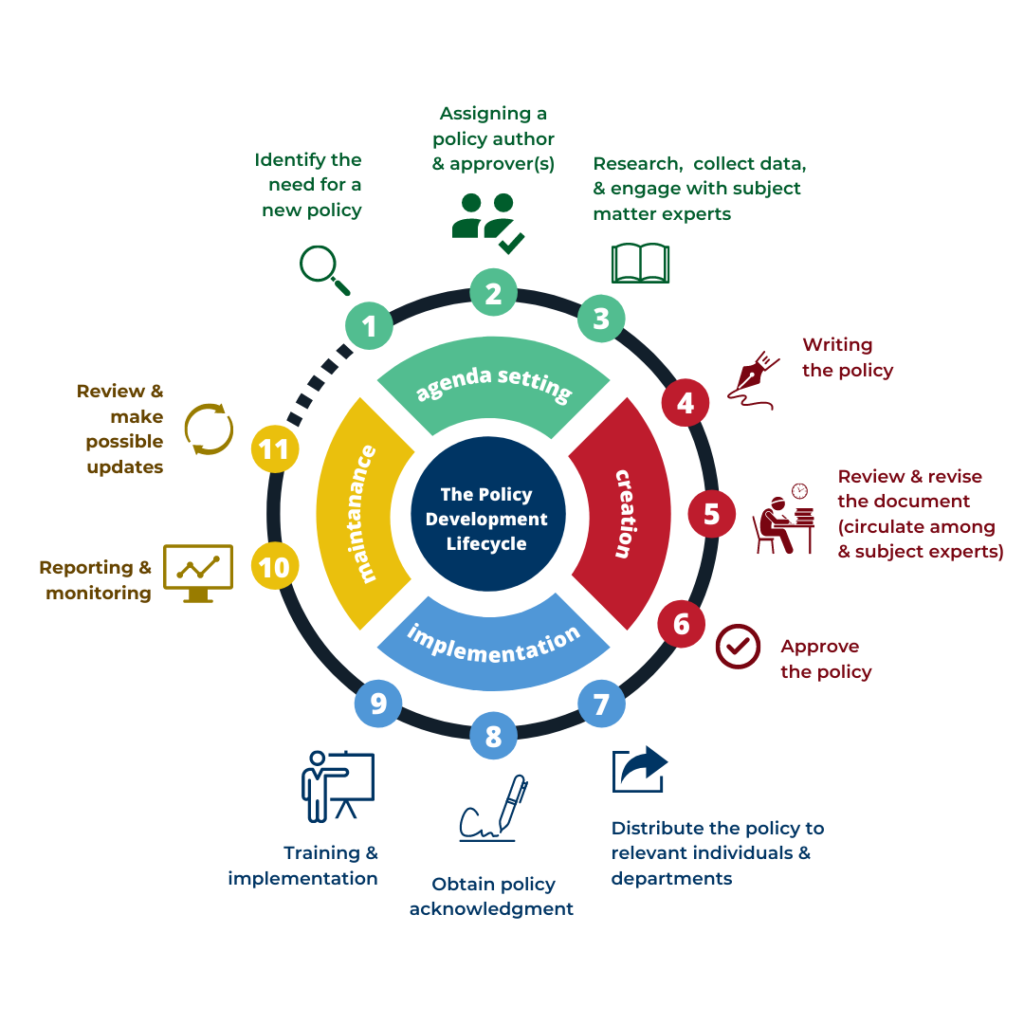
Risk Cognizance's Policy Management Software is designed to eliminate these challenges, providing a centralized, automated, and intelligent solution for the entire policy lifecycle. We help organizations transform their policies from administrative burdens into strategic assets that drive operational excellence and robust compliance.

Key Benefits and Features
Our platform brings a new level of control and efficiency to your policy management:
- Centralized Policy Repository:
- Create a single, authoritative source for all organizational policies, ensuring everyone accesses the most current version.
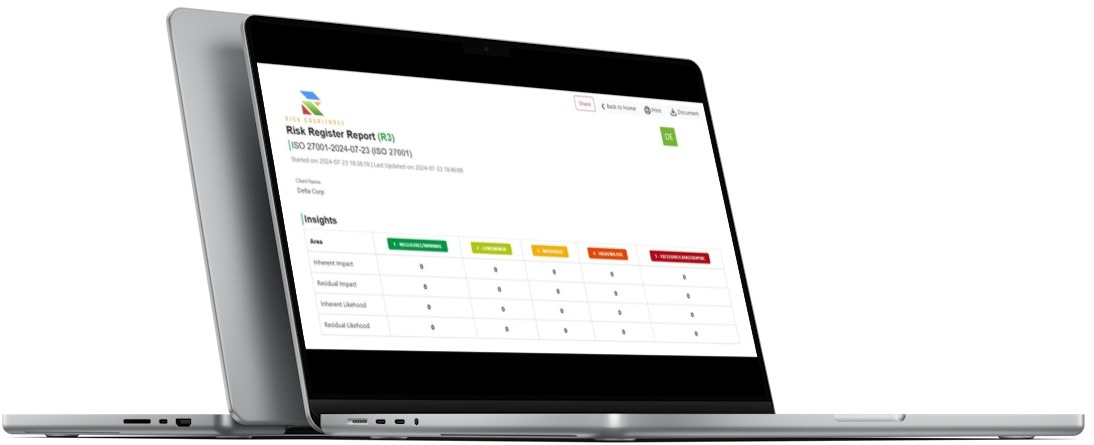
- Utilize intuitive dashboards for quick overview and status tracking of all policies.
- Automated Lifecycle Management:
- Automate policy creation, review, approval workflows, and version control, significantly reducing manual overhead.
- Schedule regular policy reviews and send automated reminders to policy owners, ensuring continuous relevance.
- Seamless Dissemination & Attestation:
- Effortlessly distribute policies to relevant employees or groups, ensuring targeted communication.
- Automate the tracking of employee acknowledgment and attestations, providing verifiable proof for compliance audits.
- Integrated Compliance Mapping:
- Our Regulatory Compliance Management Software allows you to directly link policies to specific regulatory requirements (e.g., HIPAA, GDPR, SOC 2, ISO 27001). This ensures policies are always aligned with external mandates.
- Utilize Regulatory Change Management Software to automatically flag changes in regulations, allowing you to update affected policies proactively.
- Enhanced Audit Readiness:
- With Internal Audit Management Software, policies become easily auditable, providing a clear trail of policy creation, review, dissemination, and acknowledgment.
- Demonstrate policy effectiveness with centralized documentation and automated reporting, streamlining audit processes.
- Connected Risk & Security Posture:
- Integrated within our Integrated Connected GRC Software, policies inform and are informed by your risk management efforts.
- Our IT & Cyber Policy Management Software specifically helps you manage policies related to IT security and cyber hygiene, directly impacting your IT & Cyber Risk Management Software capabilities.
- Link policies to Case and Incident Management Software to ensure that incident response procedures are consistent with your organizational policies.
- Extend policy requirements to third parties using Vendor Risk Management Software, ensuring your policies govern your extended enterprise.

AI Policy Linker
Our AI policy management with policy linker involves creating, implementing, and enforcing guidelines for the ethical and responsible use of AI within an organization. This is crucial for mitigating risks, ensuring compliance, building trust, and driving innovation as AI rapidly integrates into various aspects of business operations.
Key components of an AI policy
- Ethical principles: Establish core values like fairness, transparency, accountability, and respect for human rights to guide AI development and deployment.
- Compliance requirements: Outline adherence to relevant laws, regulations (e.g., GDPR, CCPA, EU AI Act), industry standards, and internal policies to prevent legal and ethical violations.
- Risk management: Identify, assess, and mitigate potential risks associated with AI, such as bias, security vulnerabilities, and unintended consequences.
- Transparency and explainability: Document AI models, decision-making processes, and data sources to foster understanding and trust, particularly for black-box AI systems.
- Governance structure: Define roles, responsibilities, and oversight mechanisms (e.g., dedicated committees, regular audits) for managing AI initiatives and ensuring accountability.
- Employee engagement and training: Educate employees on AI tools, ethical considerations, risks, and best practices to foster a culture of responsible AI use.
- Data privacy and security: Establish guidelines for data collection, storage, processing, and sharing to protect sensitive information and comply with privacy regulations.
- Continuous monitoring and evaluation: Implement processes for ongoing monitoring of AI system performance, impact, and compliance, with provisions for regular policy review and updates.
Benefits of AI policy management
- Mitigates ethical and reputational risks: Ensures AI systems are used responsibly and minimizes the risk of bias, discrimination, and other ethical violations.
- Ensures regulatory compliance: Helps organizations comply with evolving AI regulations and standards, avoiding potential legal penalties.
- Builds stakeholder trust: Promotes transparency and accountability, enhancing trust among employees, customers, partners, and the public.
- Drives responsible innovation: Creates a framework for exploring and leveraging AI technologies while minimizing risks and maximizing benefits.
- Improves decision-making: Provides a framework for evaluating and implementing AI solutions that align with organizational values and goals.
- Enhances employee productivity and engagement: Streamlines AI use, clarifies expectations, and fosters a culture of collaboration and responsible innovation.
Challenges in AI policy management
- Rapid technological advancements: AI technology evolves quickly, making it difficult to keep policies relevant and updated.
- Lack of standardized regulations: The AI regulatory landscape is still developing, leading to inconsistencies and complexity in compliance.
- Difficulty in measuring and mitigating bias: Identifying and addressing biases in AI algorithms can be challenging.
- Ensuring transparency and explainability: Explaining complex AI decision-making processes to stakeholders can be difficult.
- Securing stakeholder buy-in: Engaging diverse stakeholders and overcoming resistance to change can be challenging.
Best practices for effective AI policies
- Collaborative development: Involve cross-functional teams and external experts (e.g., legal, ethical) in the policy development process.
- Alignment with organizational values: Ground the policy in the organization's core values to ensure responsible AI use.
- Focus on data governance: Implement robust data governance practices for data collection, storage, and usage to ensure data quality, privacy, and security.
- Emphasize transparency and explainability: Document AI models, decision-making processes, and data sources, and strive for explainable AI whenever possible.
- Prioritize continuous monitoring and improvement: Establish processes for regular monitoring, auditing, and updating the policy to adapt to technological advancements and regulatory changes.
- Provide comprehensive employee training: Educate employees on AI policies, ethical considerations, risks, and best practices to ensure understanding and compliance.
Customizable Compliance Frameworks
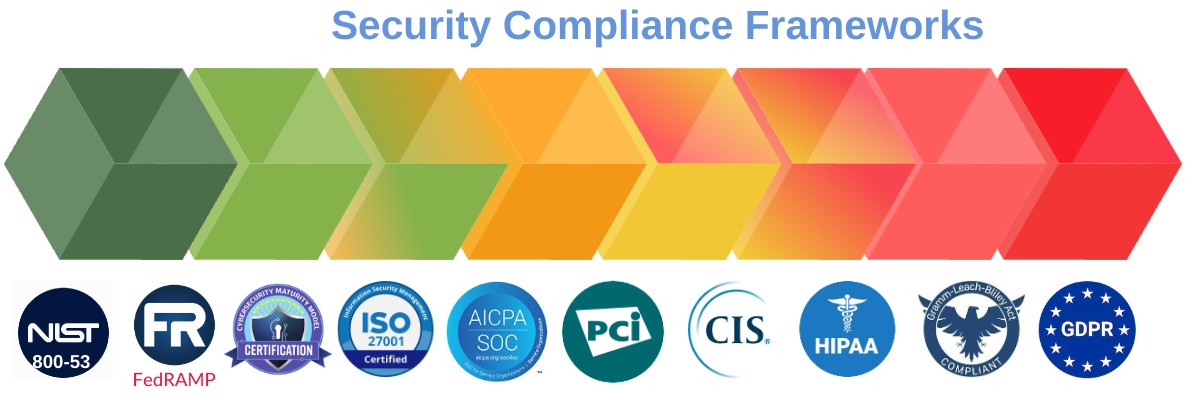
Whether your business needs to comply with CMMC, ISO, NIST, SOC 2, HIPAA, GDPR, or other regulations, Our GRC Tools for Small Medium Sized Businesses and Startups provide tailored compliance solutions that grow with your business.
Risk Cognizance's Policy Management Software
Manual policy management is a relic of the past, creating unnecessary risk, inefficiency, and audit headaches. Risk Cognizance's Policy Management Software offers a modern, integrated approach, transforming this critical function into a strategic pillar of your GRC program. By centralizing, automating, and connecting your policies to your broader risk and compliance efforts, you gain unparalleled control, ensure consistent adherence, and simplify your path to audit success. Elevate your governance and empower your organization with policies that are not just written, but truly lived.
Recognized as a
Cybersecurity Leader

Ready to bring order and intelligence to your policy management?
Book a Demo