

12 Best Healthcare GRC Software
.jpeg)
12 Best Healthcare GRC Software
Navigating GRC in Healthcare: From Strategy to Solutions
Breach Statistics in Healthcare
The healthcare sector remains one of the most targeted industries for cyberattacks. In 2024 alone, over 133 million healthcare records were exposed, according to the U.S. Department of Health and Human Services (HHS) breach portal. Ransomware, phishing, and supply chain compromises continue to be leading causes, with the average cost of a healthcare breach now exceeding $11 million per incident (IBM Cost of a Data Breach Report 2024). Beyond financial losses, these breaches disrupt patient care, compromise trust, and can even put lives at risk.
Why Business Continuity Matters
Breaches don’t just stop at stolen data. They cause downtime—forcing hospitals to cancel appointments, delay treatments, and even divert emergency patients. A strong Business Continuity Plan (BCP) ensures healthcare organizations can continue providing critical services while containing the damage.
Case Studies Highlight the Risks
Recent incidents show the devastating impact of unpreparedness. For example, major hospital networks have reported weeks of downtime after ransomware attacks, costing millions and putting patients in danger. These cases highlight why planning ahead is not optional—it’s essential for survival.
How Risk Cognizance Supports Healthcare
At Risk Cognizance, we help healthcare providers build and test resilient continuity strategies. From risk assessments and incident simulations to recovery planning, our approach ensures that when—not if—a breach occurs, organizations can recover quickly, protect patient data, and minimize disruption.
Understanding the GRC Framework
GRC is a three-part system designed to help healthcare organizations operate securely, efficiently, and ethically.
- Governance – The strategic layer that defines internal rules, responsibilities, and oversight. Governance ensures business practices align with organizational goals, setting a foundation for accountability and transparency.
- Risk Management – The proactive layer that identifies, assesses, and mitigates threats. In healthcare, this primarily means protecting PHI (Protected Health Information) from breaches, misuse, and system vulnerabilities.
- Compliance – The adherence layer that ensures organizations follow applicable laws and standards, such as HIPAA, HITRUST, GDPR, and other healthcare regulations.
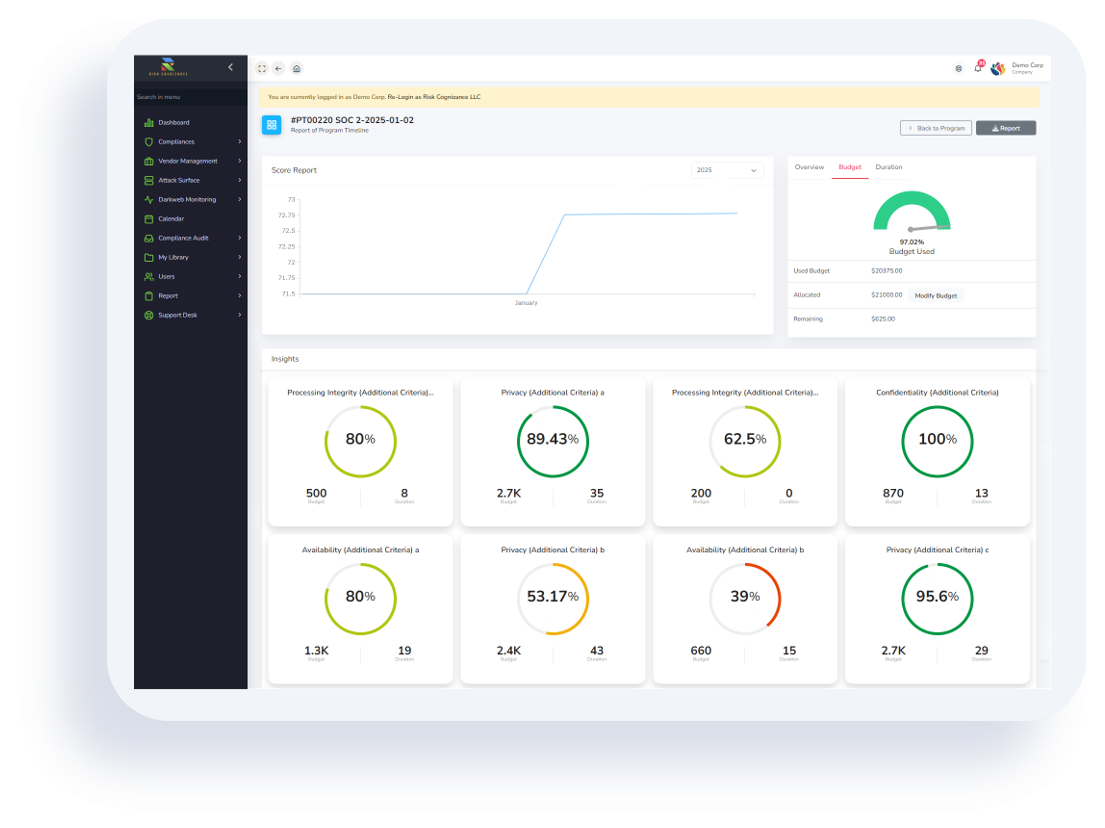

The Strategic Path to GRC Excellence
A successful GRC program follows a logical progression:
Perform a Compliance Gap Analysis – Compare existing practices with regulatory standards to identify discrepancies and create targeted remediation plans.
Embrace Compliance Automation – Use automation to streamline evidence collection, policy enforcement, and reporting. This reduces manual effort, minimizes human error, and ensures continuous compliance.
Implement the Right Tools – Choose a GRC software solution designed for healthcare, capable of managing security, privacy, and regulatory oversight from a centralized hub.
GRC Software for Healthcare Cybersecurity: Guide to the Essentials
Healthcare organizations face an average of 629 discrete regulatory requirements annually in the U.S. alone. To keep pace, they need technology that integrates governance, risk management, and compliance into a single framework.
- Effective GRC software helps:
- Safeguard PHI and other sensitive data
- Proactively identify and mitigate operational risks
- Ensure adherence to evolving regulations
- Improve operational efficiency and patient care
Key Takeaways:
GRC software streamlines compliance, governance, and risk management.
Automation enhances efficiency, reduces costs, and improves patient outcomes.
A strong GRC framework increases accountability and resilience.

Evolving Trends in Healthcare GRC
The GRC landscape is dynamic, shaped by technology and regulatory change. Key trends include:
AI and Automation – Predictive analytics, automated workflows, and continuous monitoring to identify vulnerabilities before they cause harm.
Continuous Monitoring (CCM) – Real-time visibility into compliance and security posture, moving beyond traditional audits.
Regulatory Updates – Evolving HIPAA, GDPR, and state-level laws require ongoing adaptation.
Why Risk Cognizance Leads in Healthcare GRC
Risk Cognizance provides a strategic advantage by combining continuous compliance, real-time risk assessment, and healthcare-specific expertise.
Core Strengths:
Predictive Risk Analysis – AI models forecast threats and prioritize risks.
Automated Policy Enforcement – Ensures policies and regulatory controls are consistently applied.
Continuous Monitoring – Provides immediate alerts for compliance gaps or vulnerabilities.
This ensures healthcare organizations remain audit-ready and resilient against evolving threats.
5 Key Use Cases
- HIPAA Compliance Management – Automates requirement tracking, audit evidence, and PHI safeguards.
- Vendor Risk Management – Ensures third-party vendors meet healthcare security and compliance standards.
- Incident Response & Breach Notification – Automates workflows for incident handling and required notifications.
- Operational Risk Management – Reduces clinical, administrative, and supply chain risks to improve patient outcomes.
- Regulatory Change Management – Tracks updates to laws and frameworks, ensuring timely adaptation.
FAQs
- Q: Is GRC only for large hospitals? A: No. GRC is essential for organizations of any size, from small clinics to multi-state networks.
- Q: How does GRC software reduce costs? A: By automating manual compliance tasks, reducing staff hours, and preventing costly data breaches, fines, and legal actions.
- Q: What’s the biggest mistake organizations make with GRC? A: Treating GRC as a one-time project instead of a continuous, strategic program.
Challenges of Healthcare GRC
Reactive Mindset – Many organizations only invest after a breach. GRC should be proactive.
Manual Processes – Paper-based audits and tracking are inefficient and error-prone.
Investment Barriers – Leadership often underestimates the long-term cost savings of automation and compliance.
12 Best Healthcare GRC Software Solutions
To meet rising threats and compliance burdens, here are twelve leading healthcare GRC platforms:
Risk Cognizance (G2: 4.8/5) – AI-driven automation, continuous compliance, vendor risk management, audit readiness.
Final Thoughts
GRC in healthcare is no longer optional—it’s a strategic necessity. By combining governance, risk management, and compliance into a unified framework, organizations can protect sensitive data, meet regulatory requirements, and enhance patient outcomes.
Platforms like Risk Cognizance go beyond compliance to deliver continuous resilience, ensuring healthcare providers stay ahead of threats while driving efficiency and trust.
Risk Cognizance Platform: Key Features
The Risk Cognizance platform is an AI-powered Governance, Risk, and Compliance (GRC) solution designed to provide a unified approach to managing an organization's GRC needs. By integrating AI and automation, the platform streamlines processes, enhances risk visibility, and ensures continuous compliance. The following are the key features and capabilities of the platform.
Core GRC and Risk Management
Integrated Risk Management: The platform provides a unified view for assessing, prioritizing, and mitigating risks across all aspects of an organization, including IT, operational, and financial risks.
Automated Risk Identification and Assessment: Using AI-driven analytics and real-time data, the platform continuously monitors the IT landscape to identify and assess vulnerabilities, providing dynamic risk scores and predictive analytics.
Enterprise Risk Management (ERM): Offers a scalable and holistic approach to risk management for organizations of all sizes, helping them identify, analyze, and address enterprise-wide risks.
Centralized Risk Register: Provides a single, centralized location to document and prioritize all identified risks, with AI analysis to help determine the impact and likelihood of each threat.
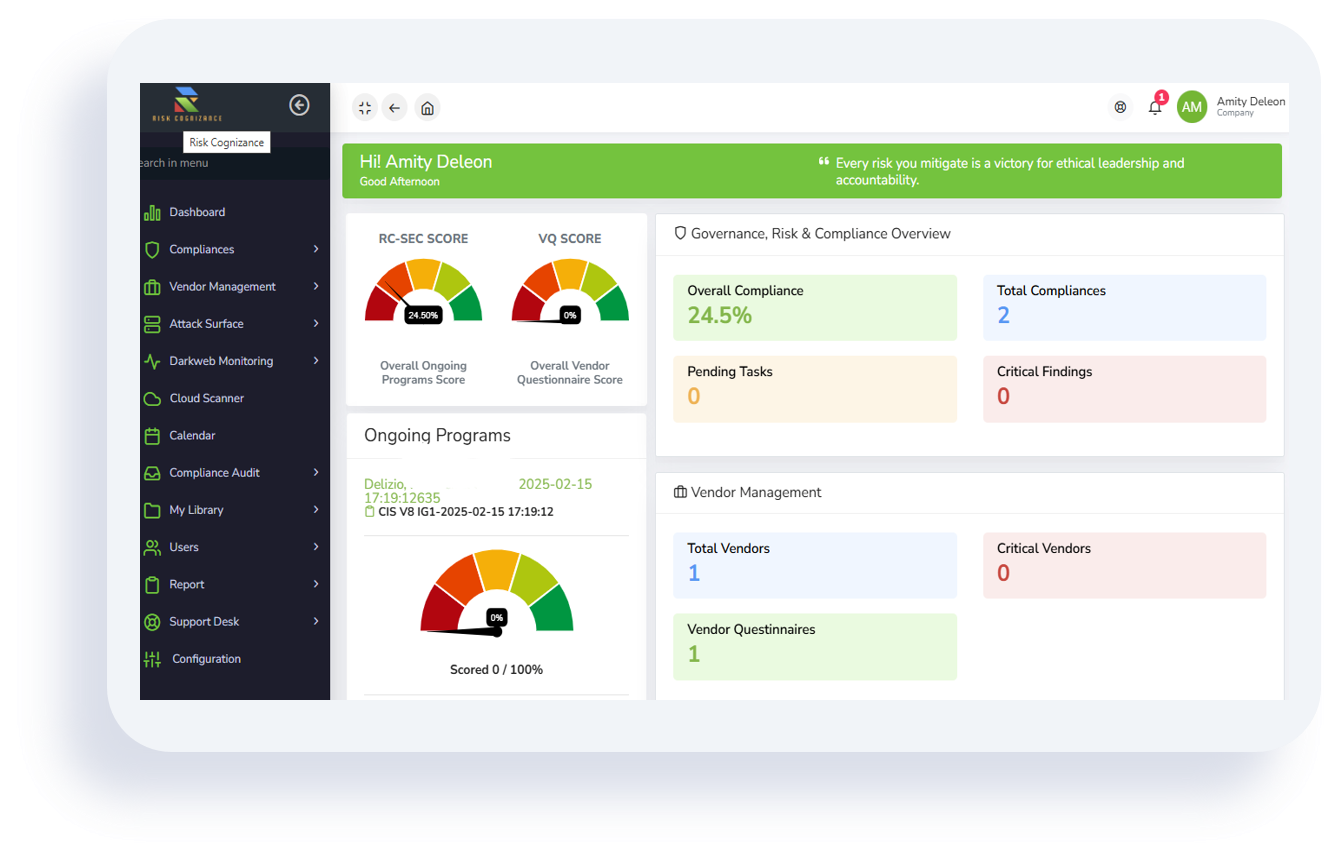
Compliance and Policy Management
Automated Compliance Management: Simplifies the management of multiple regulatory frameworks (e.g., SOC 2, HIPAA, ISO 27001, PCI DSS, GDPR) by automating compliance tasks, evidence collection, and reporting.
AI-Driven Compliance Tracking: Continuously monitors compliance status and flags non-compliance risks in real-time, helping organizations stay ahead of evolving regulations.
Policy and Control Management: Centralizes the creation, distribution, and enforcement of organizational policies. The platform uses AI to detect policy gaps and recommend updates, ensuring alignment with regulatory standards.
Regulatory Change Management: The platform proactively detects changes in regulations and automatically maps them to your existing control framework, identifying potential compliance gaps.
Threat and Security Management
Attack Surface Management: Continuously monitors the organization's digital footprint to identify potential vulnerabilities and recommends mitigation strategies to reduce exposure to cyber threats.
Dark Web Monitoring: Provides proactive threat detection by monitoring the dark web for signs of compromised credentials or data breaches, allowing for early intervention.
Third-Party Risk Management: Includes tools for managing vendor relationships and assessing third-party risks. The platform helps to assess vendor compliance, monitor security risks, and ensure that all external partners meet regulatory requirements.
Ransomware Susceptibility Reporting: Provides detailed assessments to help clients identify vulnerabilities and take proactive measures to mitigate ransomware threats.
Operational and Workflow Capabilities
Automated Workflows: Automates GRC tasks such as risk assessments, policy approvals, and regulatory reporting, which saves time and reduces human error.
Incident and Event Management: Provides an integrated system for logging, tracking, and resolving GRC-related incidents. AI-based workflows ensure a prompt response, while root cause analysis helps prevent future occurrences.
Audit Management: Simplifies both internal and external audits by automating scheduling, tracking, and report generation. The platform generates audit-ready reports, drastically reducing the time and effort required for audits.
Task and Ticket Management: Enhances operational efficiency by providing integrated tools to assign tasks, set deadlines, and track progress across teams.
Advanced Data Visualization: Utilizes powerful reporting and customizable dashboards to present compliance and risk data clearly, enabling data-driven decision-making.
AI and Intelligence
Cognitive Intelligence: The platform leverages AI and machine learning to provide predictive insights and automated decision-making, helping organizations proactively manage risks.
AI-Powered Analytics: Provides actionable insights from compliance and risk data, enhancing risk intelligence and prediction.
Generative AI (GenAI) Tools: Includes capabilities for GenAI document creation, further streamlining administrative tasks.
AI Policy Linker and Risk Syncer: Automates the mapping of controls to specific requirements and identifies related risks, ensuring a seamless connection between policies and the threats they address.
Compliancy Group – HIPAA-focused compliance toolkit and employee training.
- AuditBoard – Audit, risk, and compliance integration with strong dashboards.
- StandardFusion – Flexible compliance management across multiple frameworks.
- Corporater Integrated GRC – Risk-driven, strategy-aligned GRC platform.
- MedTrainer – Healthcare credentialing, training, and compliance management.
- Healthicity – Compliance and audit management with training modules.
- MedStack – Tailored for digital health and telemedicine providers.
- Verge Health Converge – Enterprise risk management and patient safety.
- HIPAA Secure Now – HIPAA compliance with vulnerability scanning and training.
- CloudApper HIPAA Ready – Policy templates, automated evidence logging, mobile access.
- SafetyCulture – Compliance management, inspections, and corrective action tools.