

Mastering IT Risk: The Role of a GRC Platform in Cybersecurity Management
Mastering IT Risk: The Role of a GRC Platform in Cybersecurity Management
Mastering IT Risk: The Role of a GRC Platform in Cybersecurity Management
In today’s evolving digital landscape, IT risk is no longer a background concern—it’s a mission-critical priority. As cyberattacks grow more sophisticated and regulations become increasingly complex, businesses need a smarter way to manage risk, ensure compliance, and protect sensitive data.
That’s where Governance, Risk, and Compliance (GRC) platforms step in.
A modern GRC platform doesn’t just simplify compliance—it integrates cybersecurity, risk management, governance, and reporting into one unified system. The result? Faster insights, better decision-making, and a stronger defense against emerging threats.
Below, we break down how GRC platforms are transforming IT risk management and why they’re essential for cybersecurity success in 2025 and beyond.
Why Modern Organizations Need GRC to Strengthen Cybersecurity Oversight
Traditional cybersecurity tools focus on firewalls, antivirus, and vulnerability scanning but oversight requires much more.
Organizations need centralized visibility of:
- Security controls
- Threat exposure
- Risk scoring
- Compliance requirements
- Policy enforcement
A GRC platform provides a single source of truth that helps CISOs and IT leaders see where vulnerabilities exist, how risks connect, and where action is needed. This level of oversight is impossible with spreadsheets, disconnected tools, or siloed departments.

From Chaos to Control: The Real Impact of GRC on IT Risk Management
Without a GRC platform, IT risk management often becomes chaotic:
- Inconsistent reporting
- Manual processes
- Unclear ownership
- Delayed remediation
- Compliance gaps
A GRC platform brings order by automating workflows, assigning responsibility, and standardizing processes across the organization.
This creates a repeatable, measurable, and auditable risk management framework, which greatly strengthens overall cybersecurity posture.
Unlocking Cyber Resilience Through Centralized Risk & Compliance Tools
Cyber resilience is about more than preventing attacks—it’s about recovering quickly and limiting damage.
GRC platforms enable resilience by:
- Allowing real-time risk monitoring
- Streamlining incident response
- Tracking corrective actions
- Ensuring compliance during disruptions
- Connecting risk data to cybersecurity metrics
When risk and compliance data live in the same platform, organizations can respond faster and more effectively to evolving threats.
How GRC Platforms Revolutionize Threat Response and Governance
Threat response is no longer just a technical task—it requires governance.
A GRC platform ensures that:
- Security policies are aligned with legal and regulatory requirements
- Roles and responsibilities are clearly defined
- Risk tolerances are set and monitored
- Audit trails are automatically generated
This results in a mature cybersecurity governance structure where nothing falls through the cracks.
The Hidden Cybersecurity Advantages of an Integrated GRC Approach
Many organizations don’t realize how much value GRC adds to cybersecurity. Key advantages include:
- Automated control testing
- Continuous monitoring instead of annual reviews
- Proactive threat detection through risk correlations
- Improved audit readiness
- Stronger reporting for executives and regulators
These benefits dramatically reduce exposure to cyber threats while ensuring compliance with frameworks like NIST, ISO 27001, SOC 2, and GDPR.
Transforming IT Risk Management With Automated Compliance & Reporting
Manual reporting wastes time and increases human error.
GRC automation delivers:
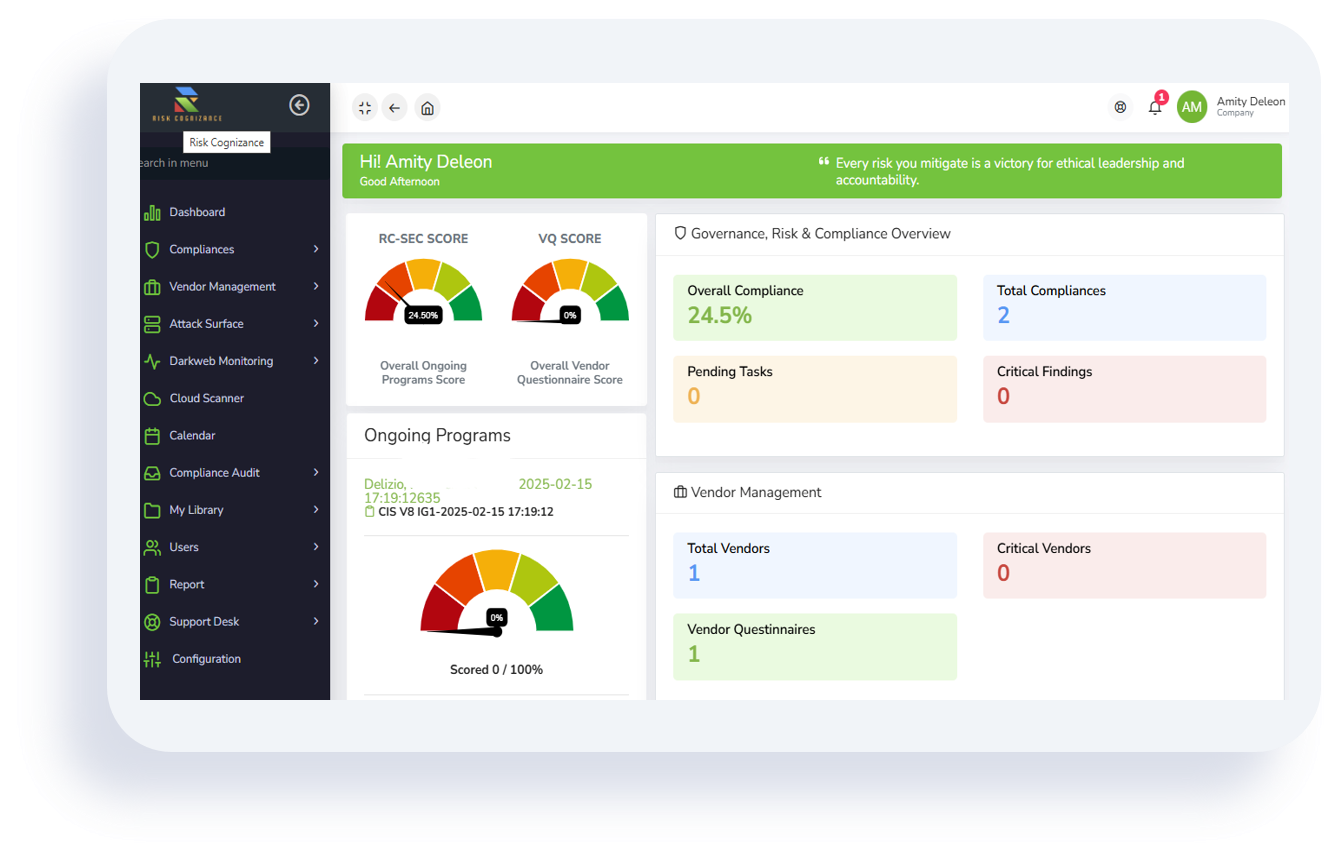
- Real-time dashboards
- Automated evidence collection
- Instant compliance scoring
- Pre-built reports for audits and board meetings
This allows cybersecurity teams to focus on high-value work—like preventing attacks—rather than paperwork.
Building a Future-Ready Cybersecurity Program With GRC Technology
The future of cybersecurity requires integration, automation, and intelligent data analysis.
GRC platforms are evolving to include:
- AI-driven risk scoring
- Predictive analytics
- Automated control mapping
- Cross-department collaboration tools
Organizations that adopt GRC technology now will be better prepared for the expanding threat landscape of 2025 and beyond.
Final Thoughts
Mastering IT risk isn’t optional—it’s essential.
A GRC platform gives organizations the tools they need to:
- Strengthen cybersecurity
- Improve risk visibility
- Simplify compliance
- Automate manual tasks
- Build long-term resilience
In a world where cyber threats are constant and regulations are complex, a GRC platform isn’t just helpful—it’s transformational.